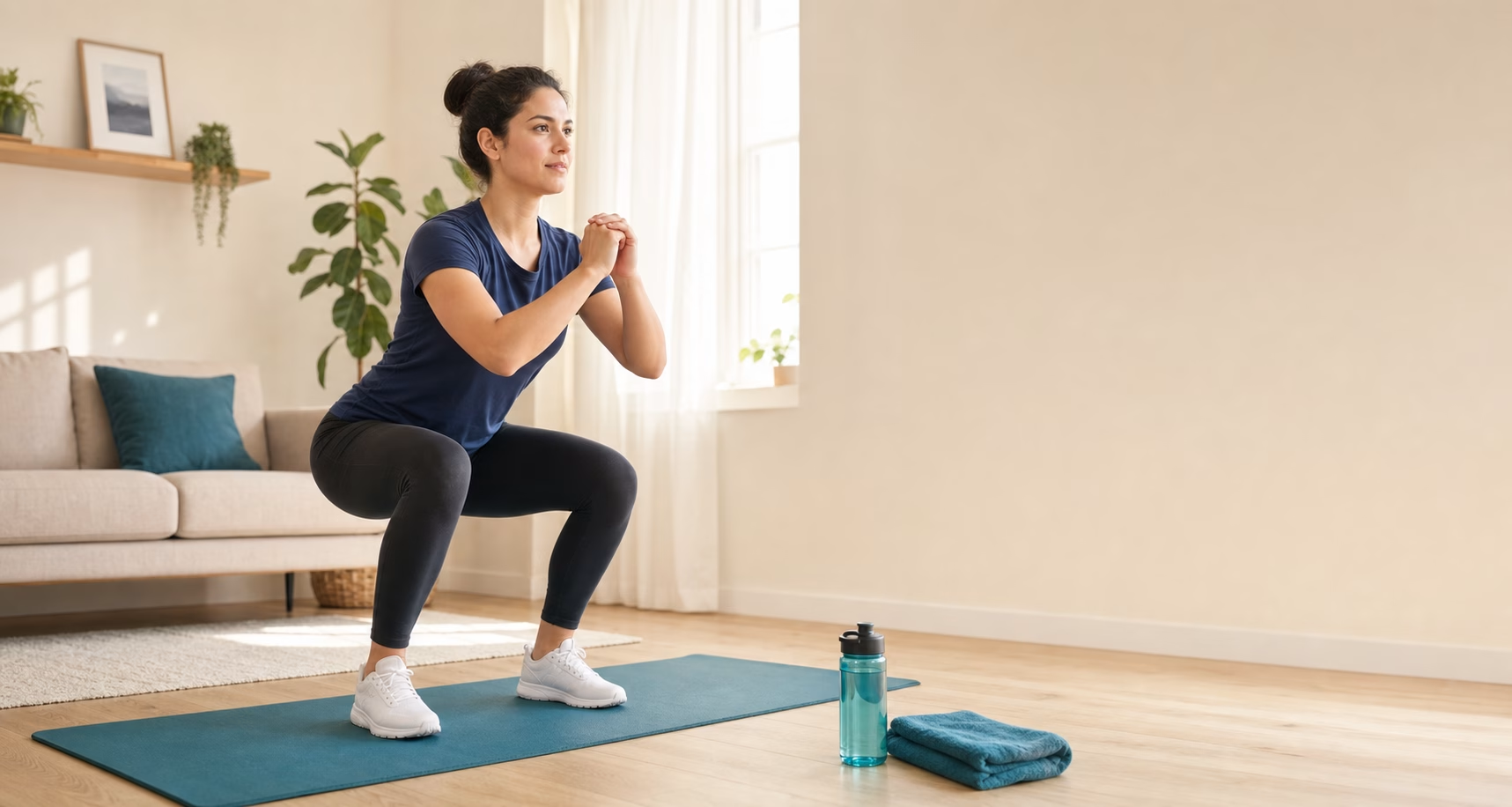
Starting a fitness habit does not require a gym membership or expensive equipment. A beginner home workout plan can build strength, improve stamina, and make daily movement feel easier. The key is to begin with manageable exercises, use good form, and progress gradually. This guide gives you a practical routine that fits into 20 minutes and can be adjusted to your current ability.
Why a Beginner Home Workout Plan Works
Consistency matters more than intensity when you are new to exercise. The CDC recommends that adults work toward 150 minutes of moderate aerobic activity each week and muscle-strengthening activity on two days. You do not need to reach that target immediately: shorter sessions still count, and your total can grow over time. A beginner home workout plan removes travel time and lets you practice in a comfortable space, which may make regular exercise easier to maintain.
Your 20-Minute Home Workout for Beginners
Complete the following circuit two or three times. Work for 40 seconds, rest for 20 seconds, and take one minute between rounds. Move at a controlled pace and stop if you feel sharp pain, dizziness, or unusual shortness of breath.
Bodyweight squats
Stand with feet about shoulder-width apart, sit your hips back, and keep your knees tracking over your toes. Use a chair for support if needed.
Wall or incline push-ups
Place your hands on a wall or sturdy counter. Keep your body straight as you bend and extend your elbows.
Glute bridges
Lie on your back with knees bent. Press through your feet and lift your hips without arching your lower back.
Alternating reverse lunges
Step one foot back and lower only as far as you can control. Hold a chair or replace lunges with sit-to-stands.
Standing knee drives
Lift one knee at a time while keeping your chest tall. Increase the pace for a low-impact cardio challenge.
How to Schedule Your No-Equipment Workout Routine
Use the beginner home workout plan on Monday, Wednesday, and Friday. On Tuesday and Saturday, add a comfortable walk or gentle mobility session. Keep Thursday and Sunday for rest or light movement. If three strength days feel too demanding, begin with two and add the third after two weeks. For simple nutrition support, connect this article to your site’s internal resource: Healthy Meal-Prep Guide. This internal link helps readers continue their wellness journey and connects related website content.
Make Progress Safely
Before each session, warm up for three to five minutes with marching, shoulder rolls, and easy squats. Choose easier variations until your technique feels stable. Then progress by adding a few repetitions, extending a work interval, or completing another round—not all three at once. The World Health Organization’s physical activity guidance emphasizes that some activity is better than none, so a realistic plan is more valuable than an extreme routine you abandon.
Listen to your body. If you have a chronic condition, injury, disability, or have been inactive for a long time, ask a qualified health professional which exercises and intensity are suitable for you. This article provides general education and is not medical advice.
Start Your Beginner Home Workout Plan Today
Your first session does not need to be perfect. Clear a safe space, set a timer, and complete one controlled round. Record what felt easy or difficult, then adjust the next workout. A beginner home workout plan succeeds when it is simple enough to repeat and flexible enough to grow with you. Start small today, stay consistent this week, and let steady progress build lasting fitness.